



If your eyes feel dry, gritty or tired by the end of a long day at the screen, you're not imagining it. "Digital eye strain" is one of the most common everyday eye complaints — and the good news is that a few simple habits, plus the right kind of eye drops, can make a real difference.
#Why screens dry out your eyes
The problem isn't really the screen itself — it's what looking at one does to your blinking. When we concentrate on a monitor or phone, we blink far less often and less fully than normal. Blinking is what spreads a fresh layer of tears across the surface of the eye, so blinking less means the tear film dries out and the surface is left exposed.
Add in air conditioning, dry indoor air, contact lenses and long unbroken hours, and the result is that familiar dry, scratchy, tired feeling.
#Simple habits that genuinely help
You can relieve a lot of the discomfort without anything from a pharmacy:
- Follow the 20-20-20 rule — every 20 minutes, look at something about 20 feet (6 metres) away for 20 seconds.
- Blink on purpose. A few slow, complete blinks re-coat the eye surface.
- Position your screen slightly below eye level so your eyelids cover more of the eye.
- Soften the air — reduce direct fans or AC on your face, and keep the room from getting too dry.
- Stay hydrated and take regular screen breaks.
The 20-20-20 rule, in one line: every 20 minutes, look 20 feet away for 20 seconds. It gives your eyes a chance to blink and refocus.
#Where lubricating eye drops come in
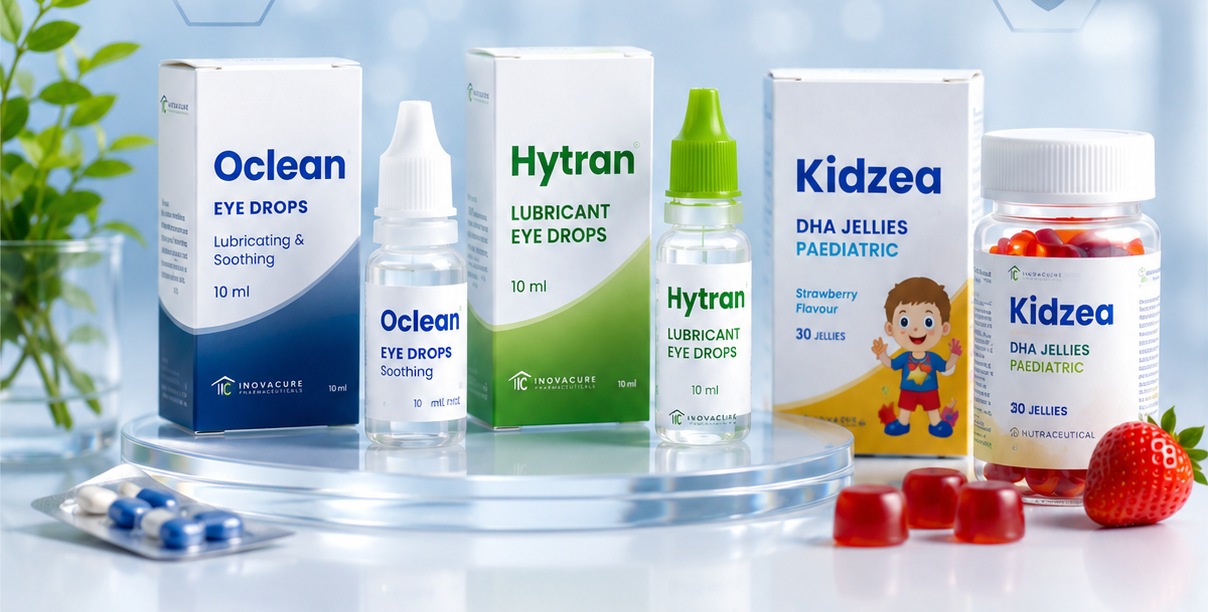
When habits alone aren't enough, lubricating eye drops (also called artificial tears) top up the eye's natural moisture and soothe that dry, gritty feeling. They're among the most common first steps for everyday dryness.
Inovacure's ophthalmology range includes lubricating eye drops developed for exactly this kind of everyday relief. As with any eye product, they're intended to be used as directed, and your pharmacist or doctor can help you choose what's right for you.
#When to see a doctor
Occasional dryness is normal. But you should speak to a healthcare professional if you have persistent or worsening symptoms, eye pain, redness that won't settle, discharge, or any change in your vision. These can point to something that needs proper assessment rather than self-care.
This article is general information, not medical advice. Please consult a qualified healthcare professional about your own eyes.
Frequently asked questions
Are lubricating eye drops safe to use every day?
Lubricating (artificial tear) drops are generally intended for regular use to relieve dryness, and preservative-free options are often preferred for frequent use. Follow the product's instructions and ask your pharmacist if you're using them many times a day.
What's the difference between lubricating drops and “redness-relief” drops?
Lubricating drops add moisture to soothe dryness. Redness-relief drops work differently — they narrow blood vessels to reduce visible redness — and aren't meant for frequent long-term use. For everyday dryness, lubricating drops are the usual choice.
Can eye drops cure dry eye?
Lubricating drops relieve the symptoms of dryness rather than curing an underlying cause. If dryness is persistent, a doctor can look for the reason and recommend the right approach.